
· 30 min read D&D 5e
How Many Magic Items Should I Give My Players?
The answer isn't a number. It's knowing what kind of power you're actually giving. A framework for evaluating magic items by impact, not rarity.
The answer isn't a number. It's knowing what kind of power you're actually giving. A framework for evaluating magic items by impact, not rarity.
Every GM eventually lands on the same search query, usually somewhere around the third or fourth session, when a player asks if they can buy a magic weapon in town and you realize you have no idea what the right answer is. The DMG has tables. Xanathar’s Guide has better tables, organized by tier and rarity, with recommended numbers per level range that feel authoritative until you actually try to use them. Reddit has a thousand threads where someone asks this exact question and the top-voted reply is always some version of “it depends on your table,” which is true the way “eat fewer calories” is true about losing weight: technically correct and practically useless.
The deeper issue is that every resource you’ll find treats magic items as fundamentally interchangeable within their rarity tier. Xanathar’s suggests a party might accumulate around eight to ten uncommon items across levels 1 through 4, and that sounds reasonable in the abstract, but it collapses the moment you think about which eight to ten. A +1 shield makes your fighter’s AC one point higher, a meaningful but contained boost that slots neatly into bounded accuracy and doesn’t ripple outward into anything else. A Bag of Holding (also Uncommon, also showing up on the same table) can reshape how your party interacts with every dungeon, every travel sequence, every resource constraint you’ve designed. The official guidance counts these as equivalent. Your campaign will not experience them as equivalent, not even close, and the gap between how the books categorize items and how those items actually land at the table is where most “I gave out too much loot” regret lives.

What you’re really asking, beneath the how-many question, is something harder to quantify: am I about to break something? Not in the catastrophic, campaign-ending sense (that’s rare), but in the slow-erosion sense, where challenges you designed stop challenging, where resource management stops mattering, where the tension that makes sessions memorable drains away because a single item you handed out at level 3 solved a category of problems you were planning to spend the next fifteen sessions exploring. That’s the question worth answering, and it requires thinking about magic items not as a count but as a series of decisions, each one reshaping what your campaign is about in ways that rarity alone will never tell you.
Consider how much structure D&D gives you for almost everything else. Character progression follows XP tables or milestone guidelines, with the class features and spell access at each level carefully calibrated against expected challenges. Encounter difficulty has a whole mathematical framework (CR calculations, adjusted XP thresholds, the adventuring day budget). Even gold has rough guidelines baked into starting equipment and treasure hoard tables, and the economy (such as it is) at least gestures toward internal consistency. These systems aren’t perfect, but they exist. They give you guardrails, a sense of when you’re coloring inside the lines and when you’ve wandered off the page.
Magic item distribution has nothing.
This is, on its face, absurd. Magic items are the single most dramatic variable a DM controls after 5th level or so. A well-placed item can define a character’s identity for an entire campaign; a poorly-timed one can turn your carefully balanced encounters into speed bumps. The difference between a party that has a Cloak of Displacement and one that doesn’t is bigger than the difference between level 7 and level 8, and yet leveling has an entire chapter of scaffolding while item distribution gets a few random tables and a shrug.
The tools the game does provide measure the wrong axis entirely. Rarity is supposed to be your guide, but rarity roughly approximates power level at best and tells you almost nothing about impact. A Cloak of Many Fashions is Common. A Bag of Holding is Uncommon, one step higher on the same scale. But the Cloak is a parlor trick, a fun bit of character flavor that never once enters your mechanical calculations, while the Bag of Holding can gut the entire encumbrance system, trivialize resource management in a survival hex-crawl, and (if your players are the creative type) become a suffocation weapon or a portable hole bomb. One rarity tier apart. The scale that’s supposed to help you make these decisions can’t distinguish between a toy and a campaign-reshaping tool.
The DMG treasure tables compound the problem by offering a different kind of false confidence. They’ll tell you that a party should have roughly X uncommon items and Y rares by level 10, which sounds like guidance until you realize that “two Rare items” could mean a Flame Tongue and an Amulet of Health, or it could mean a Cloak of Displacement and a Ring of Spell Storing, distributions that produce wildly different games. The tables count labels when what you actually need to count is consequences. How does this item interact with your party’s existing capabilities? Does it shore up a weakness or amplify an already-dominant strength? Does it solve a problem you were planning to build three sessions around? These are the questions that determine whether an item enriches your campaign or breaks it, and rarity doesn’t answer a single one of them.
What’s missing isn’t more tables or tighter rarity definitions. It’s a framework for evaluating what a magic item actually does to your game once it lands in a player’s hands. A way to think about impact that accounts for party composition, campaign tone, and the specific challenges you’ve designed, rather than just checking whether the little tag on the item says Uncommon or Rare. The good news is that building one isn’t complicated. It just requires asking a different set of questions than the ones the book trains you to ask.
Not all magic items represent the same kind of gift, and the sooner a GM internalizes that, the more generous (and more interesting) their world becomes. Every item you might hand out falls into one of three impact bands based on how much thought it demands before it leaves your prep notes and enters a player’s inventory.
There is a category of magic item that asks nothing of you as a GM. It won’t warp an encounter, won’t obsolete a puzzle you spent an hour designing, won’t make one player feel like they’re playing a different game than the rest of the table. A Cloak of Many Fashions, a dagger whose crossguard glows faintly within a hundred feet of undead, a clockwork music box that plays a melody from a civilization no one at the table has heard of. These items carry zero mechanical risk and enormous atmospheric reward. They make the world feel like a place where magic has seeped into the ordinary, where even a dead bandit’s pockets might hold something worth talking about for ten minutes.
GMs chronically underuse this band because the phrase “magic item” carries connotations of power, of careful balance, of something that needs to be earned. But a coin that always lands heads isn’t power. A pair of sending stones with one charge left isn’t going to break your campaign. It’s going to produce a single moment of desperate creativity when the party decides what their one message should say. A talking sword with strong opinions about interior architecture isn’t a combat advantage; it’s a recurring bit that the table will remember longer than most boss fights. These are toys, in the best sense of the word, and players who receive them do what players do with toys: they play.

The return on investment here is absurd. Thirty seconds of invention (a candle that burns without consuming itself, a quill that only writes in limericks, a compass that points toward the nearest body of water) buys you player engagement that no amount of carefully balanced encounter design can replicate. When a rogue searches a desk and finds something genuinely curious rather than “2d6 silver pieces,” the table learns that curiosity pays off in your world. Investigation checks start happening unprompted. Players start searching corpses not for gold but for stuff, and that shift in motivation is one of the quiet markers of a table that’s fully bought into the fiction.
Band 1 items belong everywhere you want the world to feel lived-in and strange. Corpse loot, market stalls in a port city, the grateful gift of a villager whose goats you rescued from gnolls, the contents of a wizard’s junk drawer, the prize at the bottom of a festival game. Give one every session. Give two. The only limit is your willingness to spend a few seconds asking yourself “what would be interesting but not powerful?” Once you’ve practiced that question a few dozen times, the answers come faster than you can use them.
One small trick that extends their value even further: hand them out unidentified. A ring that does something (the player can feel it hum when they hold it near firelight, but they don’t know what it does yet) carries a sense of mystery that lasts until they find time to cast Identify or experiment. Even when the answer turns out to be “it keeps your tea warm,” the journey of wondering was its own reward, and you’ve gotten two or three sessions of speculation and table conversation out of an item with no mechanical impact whatsoever.
Most of the magic items you hand out should live here, and the good news is that these are the ones you can be generous with. Band 2 items carry real mechanical weight. They change what a character can do, shift tactical calculations, and make players feel rewarded. But they come with constraints already engineered into their design that prevent them from warping the game. The balancing isn’t something you have to impose; it’s load-bearing structure built into the item itself. Your job is to recognize which levers are doing the work and trust them.
Consumability changes an item completely. A Scroll of Counterspell and an at-will Counterspell produce the same effect on the stack, but they create entirely different play experiences. The scroll introduces a decision point that ripples backward and forward through the session: backward, because the player has been carrying it and thinking about when to use it, building anticipation; forward, because once it’s gone, it’s gone, and every future encounter happens without that safety net. Consumables are power with a lifespan, and that lifespan does all the balancing work for you. You can hand out potions, scrolls, single-use wands, and alchemical grenades with relative abandon. The more interesting question isn’t “is this too strong?” but “will the player agonize over the perfect moment to use it?” (The answer is almost always yes, which means consumables often balance themselves even harder than you’d expect, because players hoard them through encounters where they’d have been perfectly appropriate.)
Charges operate on a similar principle but with a longer arc. A Wand of Magic Missiles with seven charges that recharge at dawn gives the party a reliable resource, but one that demands rationing across the adventuring day, and rationing is where interesting decisions live. The player holding that wand becomes a resource manager in miniature, weighing “do I spend two charges on this fight or save them for whatever’s behind that door?” That calculation is the game working exactly as intended. Charged items stay in Band 2 as long as the charge economy creates meaningful scarcity; when an item has so many charges relative to its use rate that the player never worries about running out, it’s functionally permanent and you should evaluate it on those terms instead.
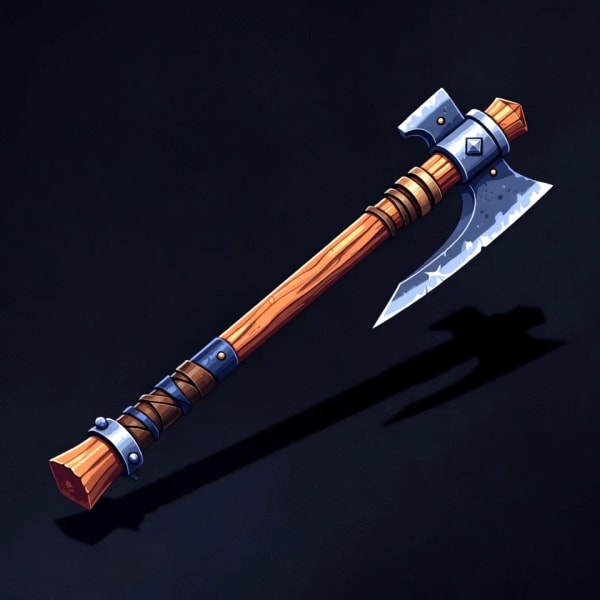
Some items balance through tradeoffs baked directly into the fiction. The Berserker Axe is the classic example: it hits harder than a mundane greataxe has any right to, but once you start swinging, you don’t stop until everything nearby is dead or unconscious (including, potentially, your allies), unless you make a Wisdom save to wrench yourself out of the rage. That’s not a drawback tacked on to nerf the weapon; it’s a character-defining feature that creates memorable scenes. The barbarian cleaving through a horde of goblins only to turn, eyes wild, toward the party’s bard. That moment is the item earning its keep narratively while keeping itself in check mechanically. Cursed items and items with dramatic costs live here precisely because the cost isn’t hidden from the player (at least not after the first use); it’s part of the ongoing negotiation between power and consequence. A blade that crits on 19 but screams when drawn, announcing you to every creature within 300 feet, is strong in a straight fight and catastrophic for an ambush. The player has to decide which matters more right now, and that decision is the balance.
Attunement gets treated as a balancing mechanism for individual items, but it’s actually a stacking limiter. The three-attunement-slot cap prevents a character from wearing a Cloak of Protection, a Ring of Spell Storing, Winged Boots, Gauntlets of Ogre Power, and a Headband of Intellect all at once, forcing choices about which three define the character’s loadout. But attunement alone doesn’t make a specific item balanced. A Staff of the Magi requires attunement, and it’s still one of the most game-warping items in the DMG. When you’re evaluating whether something belongs in Band 2, ask what constraint is doing the work besides the attunement slot. If the answer is “nothing, it’s just strong and requires attunement,” you’re probably looking at Band 3.
Then there’s situational scope, which balances items not through costs or limits but through the simple fact that the game takes place across varied terrain, both literal and tactical. A Cloak of Elvenkind is extraordinary for infiltration and stealth (advantage on Stealth checks and disadvantage for others to perceive you is no joke), but in the middle of a fight against a dragon in an open field, it’s a fancy cape. A Trident of Fish Command is devastating in a coastal campaign, potentially giving a player an army of sharks, and purely decorative in a desert hexcrawl. Ring of Water Walking, Boots of the Winterlands, a Rope of Climbing: these items dominate their niche and are irrelevant outside it, which means the campaign itself regulates how often they shine. You can give these out freely and trust the variety of your encounters to keep them from becoming the answer to everything.
Finally, tier-appropriate numerical boosts belong in Band 2 almost by definition, because bounded accuracy is designed to absorb them. A +1 weapon at 5th level feels significant to the player who receives it (and should, that’s the point) but it shifts the math by roughly 5% on attack rolls, which is meaningful without being destabilizing. The bounded accuracy system in 5e was built with the expectation that characters would accumulate small numerical bonuses over time; a +1 here and a +1 there is the system working as designed, not straining against it. Where this shifts is at the extremes: a +3 weapon is a different conversation, not because the math is incomprehensible but because so few monsters are designed to withstand that hit rate, and because stacking a +3 weapon with other accuracy bonuses can start to make misses feel impossible, which flattens tension.
The through-line across all of these is that Band 2 items require you to think but not to worry. Recognize which constraint is operative, confirm it’s actually doing work in your specific campaign (a situationally-limited item isn’t self-balancing if your campaign happens to be set entirely in that situation), and then give the item with confidence. This is the band where generosity pays off, where players get to feel powerful and clever and lucky, and you get to watch interesting decisions unfold without needing to intervene.
| Constraint | How It Balances | Example |
|---|---|---|
| Consumability | Power with a lifespan: once used, it’s gone, forcing players to choose the perfect moment | Scroll of Counterspell |
| Charges | Rationed power that demands resource management across the adventuring day | Wand of Magic Missiles (7 charges, recharges at dawn) |
| Tradeoffs / Curses | A baked-in cost that creates dramatic tension alongside mechanical strength | Berserker Axe (can’t stop attacking until combat ends or you save) |
| Attunement | Limits stacking, forces hard choices about which 3 items define a character’s loadout | Three-slot cap across all attuned items |
| Situational Scope | Dominant in a niche, irrelevant outside it; campaign variety does the balancing | Cloak of Elvenkind (stealth god, combat bystander) |
| Tier-Appropriate Numbers | Bounded accuracy absorbs small bonuses by design | +1 weapon at 5th level |
The rogue pulls Winged Boots from the dragon’s hoard, laces them up right there in the smoldering lair, and rises six inches off the ground with a grin that tells you everything about the next six months of your campaign. Every pit trap you’ve sketched into upcoming dungeons just became a minor inconvenience. The collapsing bridge in Act Three? Dramatic for everyone except the person hovering above the rubble. That rooftop chase you’ve been planning through the thieves’ quarter works completely differently now, because the rogue doesn’t need to jump between buildings. She just flies. Your prep hasn’t been invalidated, exactly, but it has been permanently renegotiated, and the negotiation started the moment those boots hit the table.
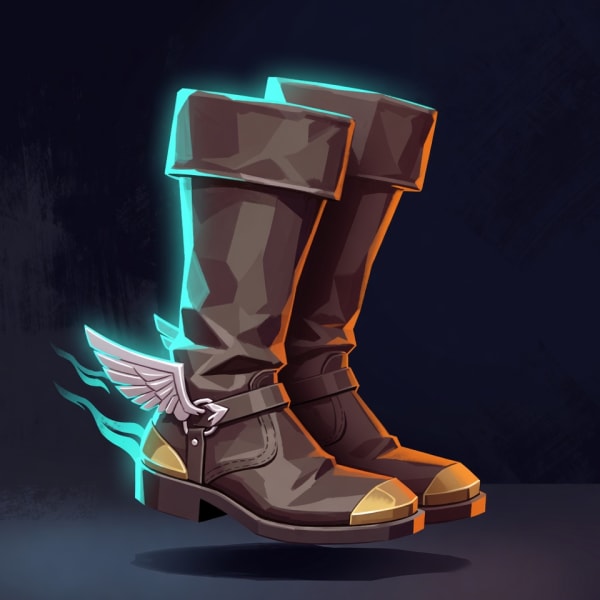
Band 3 items are the ones that change your campaign’s physics. Band 1 items make the world feel richer; Band 2 items make characters noticeably more capable; Band 3 items make certain categories of challenge work differently from this point forward. Not easier, necessarily. Differently. A flying party member doesn’t trivialize a fight against archers on a castle wall, but it does transform it from a “how do we get up there” problem into a “now there’s a melee happening at altitude” problem, which demands different encounter design on your end.
Permanent flight is the classic example because almost every GM has a story about it, but the category is broader than that. Consider what happens when you hand out an item that eliminates a resource your campaign was built around. A Decanter of Endless Water is a quirky utility item in most campaigns, a fun thing the cleric uses to fill bathtubs and annoy shopkeepers. Drop that same item into a desert survival campaign where you’ve been carefully tracking water rations, making players choose between pressing forward and turning back to the last oasis, building tension around the fundamental scarcity of water in a hostile landscape, and you’ve just removed the load-bearing wall from your entire campaign premise. The survival pressure that made every decision feel weighty evaporates, quite literally, into an infinite stream pouring from a flask.
At-will teleportation and long-range travel items operate on the same principle but attack your campaign’s geography instead of its resources. All those carefully mapped distances between cities, the “the mountain pass is snowed in” complications, the travel encounters that let you develop NPC relationships on the road, the ticking clock of “can we reach the capital before the duke’s army”: these become negotiable the moment someone can circumvent the map. Your world doesn’t shrink, but the friction of moving through it does, and a surprising amount of campaign tension lives in that friction.
Then there are the items that break action economy in ways that a class’s design never anticipated: an extra attack here, a bonus action ability there, a reaction that triggers often enough to feel like a free turn. These are subtler game-changers because they don’t rewrite your campaign’s premise the way flight or teleportation can, but they accumulate session over session, steadily inflating one character’s output until encounters you’ve balanced for five players are really balanced for four-and-a-half players and one small army. The warlock who picks up a Scimitar of Speed doesn’t look game-warping the way Winged Boots do, but six sessions later you’re wondering why your carefully tuned boss fights keep ending a round early.
And then, at the far end of Band 3, you have the nuclear options: the Deck of Many Things, the artifacts with world-shaping properties, anything adjacent to Wish. These deserve their own mention not because they’re categorically different from other game-changers but because their radius of impact is so large and so unpredictable that even experienced GMs can be caught off-guard. The Deck is the perfect example: no other item in the game’s history has generated more legendary stories and more campaign-ending disasters, often at the same table in the same session, because the entire point of the Deck is that nobody (not the player, not the GM) controls what happens next.
Here’s what matters about everything in Band 3: none of it is a mistake to give out. Some of the most electric moments in tabletop history are Band 3 moments. The paladin who finds the Holy Avenger becomes a different character in the way that finding Excalibur makes you a different knight, not overpowered, but transformed, playing with a sense of weight and destiny that no +1 longsword can deliver. A flying carpet that lets the party bypass an entire mountain range creates the kind of story that gets retold at every session zero for the next decade. The Deck of Many Things is legendary specifically because it warps campaigns. That’s the feature, not the bug, and tables that draw from it are participating in a tradition as old as the game itself.
The difference between a great Band 3 moment and a campaign-derailing one is entirely about intentionality. When you place Winged Boots in a hoard knowing that your rogue will probably take them, and you’ve already been thinking about how flight reshapes the dungeon you’re designing for next month, that’s a GM making a deliberate choice to evolve their campaign. When you roll randomly on a treasure table and accidentally hand out a Carpet of Flying in session three of a wilderness hexcrawl where overland travel is the game, that’s a GM who now has to either take back a gift or rebuild their campaign on the fly. Neither of which feels good.
So the question for every Band 3 item isn’t “is this too powerful?” It’s am I ready to redesign around this? If the answer is yes (if you’re excited about the new problems flight creates, if you want to see what your desert campaign becomes when water is abundant and the tension has to come from somewhere else, if you’re genuinely curious what the Deck will do to your story) then hand it over with both hands. And if you’re not ready yet, you don’t have to say no. The constraints that define Band 2 (consumability, charges, meaningful tradeoffs) can reshape almost any Band 3 concept into something your campaign can absorb without losing the fantasy. Band 3 items aren’t mistakes waiting to happen. They’re invitations to run a different campaign than the one you started, and some of the best campaigns are the ones that accepted that invitation.
Everything so far might sound like a more elaborate version of the rarity tables you already have, and if the bands were static properties of items, it would be. But the whole point of thinking in bands rather than rarities is that an item’s band placement depends on the game it lands in. The same magic item can sit in different bands depending on when you hand it out, what kind of campaign you’re running, and who’s in the party receiving it. This is where the framework actually earns its keep.

Consider a humble +1 longsword. At level 2, bounded accuracy is wound so tight that a persistent +1 to attack rolls visibly warps the math of every combat encounter for the rest of that tier. The gap between hitting and missing is narrow at low levels, and shifting it by one point in the fighter’s favor compounds across a full adventuring day in ways that are easy to underestimate. That’s a Band 3 item, something you build sessions around and whose consequences you’ll be managing for months. Hand out the same sword at level 5 and it’s a welcome upgrade, the kind of thing that makes a player’s week but doesn’t force you to recalibrate your encounter design: solidly Band 2. By level 15, when the party is swimming in legendary weapons and fighting creatures whose AC has scaled well past that modest bonus, a +1 sword is barely worth mentioning, a stopgap you’d give to an NPC ally or leave in a chest as set dressing. Band 1, if it even registers. The sword didn’t change. The context around it did.
Campaign premise exerts an equally powerful pull, sometimes even more so than level. A Bag of Holding is the classic example because its mechanical effect (dramatically expanding carrying capacity) ranges from irrelevant to campaign-warping depending on whether carrying capacity matters in your game at all. Drop one into a survival hex-crawl where the party is counting rations, tracking light sources, and making hard choices about what to haul through a frozen mountain range, and you’ve just undercut the central mechanical tension your entire campaign is built on. Every interesting decision about “do we bring the extra rope or the extra food” evaporates the moment everything fits in the bag. That’s not just Band 3; it’s the kind of item that can dismantle a campaign pillar if you’re not paying attention. Now put that same Bag of Holding in an urban political intrigue where the party travels by carriage between noble estates, nobody has tracked encumbrance since session zero, and the most dangerous thing they carry is a forged letter. It’s Band 1, a fun flavor item, maybe useful for smuggling something past a guard once, but mechanically it changed nothing because nothing in your game depended on what the bag removes.
Party composition is the third axis, and the one GMs most often overlook because it requires you to think about what capabilities the party already has access to rather than what the item does in a vacuum. A Broom of Flying is a good illustration: hand it to a party whose wizard has had Fly prepared since level 5 and casts it regularly, and you’ve given them a redundant capability: useful for freeing up a spell slot, sure, but not opening any doors that were previously closed. Band 2 at most. Hand that same broom to a party of four martial characters (a fighter, a barbarian, a rogue, and a ranger) and you’ve just introduced flight to a group that had no access to it whatsoever. Every encounter with vertical terrain, every fleeing enemy, every chasm and castle wall now plays differently. The broom didn’t grant “flight” in the abstract; it granted flight to a party that couldn’t fly, which is a fundamentally different gift. That’s Band 3, the kind of item that reshapes what the party is capable of and forces you to account for it in every piece of adventure design going forward.
The uncomfortable upshot of all this is that you can’t just look up the answer. No table, no matter how detailed, can tell you what band an item falls into for your campaign, because the table doesn’t know that your party’s druid already covers healing, or that your game’s entire dramatic engine runs on resource scarcity, or that your players are level 3 and bounded accuracy hasn’t loosened up yet. Rarity is a fixed property printed in a stat block: an item is Rare or Very Rare regardless of who holds it or when. Bands are contextual, a product of the relationship between the item, the party, the level, and the campaign. Evaluating that relationship for each item you place is genuinely more work than consulting a loot table, but it’s the work that actually determines whether your players feel empowered or overpowered, whether the item lands as a reward or an accident. It’s the work that matters.
There is one situation where raw item count genuinely matters, and it has nothing to do with party-wide totals. When multiple items concentrate on a single character, their effects don’t just add. They compound in ways that can dismantle your encounter math. Consider a fighter who picks up +1 plate armor, a +1 shield, and a Cloak of Protection over the course of a campaign. Each item sits comfortably in Band 2: useful, meaningful, but not warping. No reasonable GM would hesitate to hand out any one of them. But stack all three on the same character and she’s walking around at AC 23 before anyone casts Shield of Faith, before she takes the Dodge action, before the terrain even matters. Creatures that pose a legitimate threat to the rest of the party simply cannot hit her with anything short of a natural 18, which means you’re either ignoring her in combat (which feels terrible for the player) or you’re inflating monster attack bonuses to compensate, which makes every other PC feel like they’re made of paper.
The math broke not because any single item was too strong, but because three reasonable items accumulated on one character and pushed her effective power from Band 2 into Band 3 territory. This is the stacking problem, and it’s the one place where counting items actually tells you something useful. Five Band 2 items distributed across five characters is a well-equipped party. Five Band 2 items on one character is an arms race between you and your own loot table.
And the stacking problem isn’t purely mechanical. When one player is draped in magic items while another is still swinging a mundane longsword, the table tension that creates has nothing to do with encounter balance and everything to do with the social contract of the game. The under-equipped player doesn’t need to run the numbers to feel like they’re falling behind. They can see it every round when their attacks bounce off while the loaded character cleaves through everything. Uneven distribution breeds resentment faster than overpowered items breed broken encounters, because the resentment is personal in a way that a busted AC calculation never is. Encumbrance is one of the natural pressure valves against stacking: when carrying capacity actually matters at your table, players face real choices about which items to keep on their person, and the fantasy of wearing every magic item you own runs headlong into the reality of weight and bulk.
Band 1: Give Freely Does this item change my prep? No. Flavor items, minor consumables, narrow situational tools. Scatter these everywhere. They make the world feel magical at zero cost.
Band 2: Self-Balancing Does this item change my prep? Not really. The game handles it. Consumables with real impact, tradeoff items, charge-limited items, attunement items, situational capabilities, tier-appropriate numerical boosts. This is where most of your distribution should live.
Band 3: Game-Changers Does this item change my prep? Yes, and that’s fine, but do it on purpose. Permanent new capabilities, resource eliminators, action economy expanders, artifacts. Give these deliberately. Ask: “Am I ready to redesign around this?”
Remember: The bands move. Evaluate items against your party’s level, your campaign’s context, and your party’s composition, not against a generic table.
How some common items typically land (keeping in mind that context shifts any of these):
| Item | Rarity | Typical Band | Why |
|---|---|---|---|
| Cloak of Many Fashions | Common | 1 | Pure flavor, no mechanical impact |
| Driftglobe | Uncommon | 1 | Useful light source, doesn’t shift power |
| Potion of Healing | Common | 1-2 | Band 2 at level 1, Band 1 by level 5 |
| +1 Weapon | Uncommon | 2 | Predictable math boost at tier 2 |
| Cloak of Elvenkind | Uncommon | 2 | Powerful but narrow: stealth only |
| Wand of Magic Missiles | Uncommon | 2 | Strong but charge-limited |
| Flame Tongue | Rare | 2 | High damage, predictable math |
| Berserker Axe | Rare | 2 | Power offset by loss of control |
| Bag of Holding | Uncommon | 1-3 | Band 3 in survival campaigns, Band 1 in urban ones |
| Broom of Flying | Uncommon | 2-3 | Band 3 for all-martial parties, lower if flight exists |
| Staff of the Magi | Legendary | 3 | Reshapes the caster’s entire capability set |
| Deck of Many Things | Legendary | 3 | Campaign-redefining by design |
A Flame Tongue and a Bag of Holding might show up in the same treasure hoard, and that’s about the least interesting thing you can say about either of them. One reshapes every combat encounter it enters; the other dissolves a logistical constraint your players forgot they had. Treating them as interchangeable entries on a loot table (two checkmarks in the same column) is the counting mindset, and it’s the reason GMs agonize over numbers that were never meant to bear that weight. The moment you start seeing each item for what it actually does to your game, the question of how many stops feeling like a question at all.
Load your world with Band 1 items freely and without guilt: driftglobes in every third dungeon room, a sentient but deeply unhelpful letter opener, boots that leave flaming footprints but don’t actually deal fire damage. These are the textures that make a setting feel lived-in rather than balanced, and your players will remember them long after they’ve forgotten what plus their sword had. Build your distribution around Band 2, the workhorses that give characters new options without rewriting encounters, and let shops do the heavy lifting so players feel like they’re choosing rather than receiving. A display case with a Cloak of Elvenkind priced just beyond what the party can afford does more narrative work than any treasure hoard table ever has. And when it comes to Band 3 (the items that genuinely reshape what’s possible) place them like you’d place a plot twist, because that’s what they are.
You don’t need a magic item budget. You need taste.
ScryRPG’s marketplace has thousands of items across all three bands, ready to drop into your campaign. Browse, evaluate, and build loot that fits, not loot that counts.
Staring at a Broom of Flying and not sure which band it falls into for your party? Come think out loud with us.

How the DMG's XP budgets, multipliers, and difficulty thresholds work in plain language, where the math goes blind, and the heuristics that fill the gap.
Complete inventories with items, prices, shopkeepers, and mystery goods you can drop into any D&D session.

A practical template for promises, clues, NPCs, loot, unresolved threads, and prep reminders your future self will need.