
· 29 min read
The Psychology of Loot at the Table
Why rolled treasure feels better when probability, scarcity, reveal, and table politics all matter.
Why rolled treasure feels better when probability, scarcity, reveal, and table politics all matter.
Blizzard Entertainment employs behavioral psychologists (actual PhDs who study operant conditioning and reward schedules) to tune the drop rates in Diablo. Every legendary beam of light that erupts from a fallen monster has been calibrated through years of telemetry data, player retention curves, and internal playtesting to hit at precisely the frequency that keeps you clicking. Bungie runs A/B tests on the color of engrams in Destiny, on the length of the decryption animation, on whether the camera should pull in tight or hold wide when an exotic drops, because they’ve learned that the moment of revelation matters almost as much as what’s inside. The entire gacha industry, a market worth tens of billions annually, is built on B.F. Skinner’s research into variable-ratio reinforcement schedules, which is a clinical way of saying they figured out exactly how to make a slot machine feel like Christmas morning.
Brilliant work, and it cost staggering amounts of money.

So here’s the part that should make you laugh: Gary Gygax did it first in 1974 with a d100 table, a typewriter, and what we can safely assume was zero budget for behavioral research. The original D&D random treasure tables (nested rolls where you might get nothing, might get coins, might roll on the gems sub-table, might hit the one-in-a-hundred chance for a magic item that then required another roll to identify) already contained most of the psychological architecture that the games industry would spend the next fifty years rediscovering and refining. Variable rewards, tiered rarity, the suspense of not knowing what you have until you examine it, the social drama of distributing scarce resources among a party with competing interests. All of it was there, encoded in a few pages of lookup tables that assumed you owned enough dice to staff a casino.
But something happened in the decades between then and now. Video games took these principles and industrialized them (iterated, measured, optimized) while tabletop RPGs largely let the practice fossilize. The DMG treasure tables became something you consulted dutifully or, more often, something you skipped entirely in favor of hand-placing items that fit the narrative. Which is a perfectly reasonable thing to do, except that it strips out most of what made loot psychologically compelling in the first place. If you curate every item drop, you’ve removed the slot machine and replaced it with a vending machine: functional, predictable, and about as thrilling as buying a sandwich.
The irony runs deeper than that, though, because you actually have better tools for creating loot excitement than any video game does. A game server can’t read the room. It can’t see that the fighter has been coveting a flaming sword for three sessions and decide that this is the moment, or hold off because the tension of wanting is doing more dramatic work than the satisfaction of getting ever could. It can’t make the rogue’s player physically reach across the table to grab a card. It can’t pause, describe the faint hum coming from inside the chest, and watch five faces lean forward at once. Video games have scale and data; you have timing, context, and the ability to improvise around a living audience. The psychology is the same, but the instrument is fundamentally more expressive.
I’m going to lay out four principles that the loot-design industry runs on (variable reinforcement, social comparison, the reveal, and loss aversion) translated into the vocabulary of tabletop play. Think of them as a toolkit rather than a critique. You probably already deploy some of these instinctively, because good GMs tend to rediscover game-design principles through sheer pattern recognition; the goal here is to give you the language for why they work and enough concrete technique to deploy them deliberately in the moments that matter. Not every goblin’s pocket needs to be a psychological event. But when the dragon dies, when the vault door swings open, when the campaign’s MacGuffin finally surfaces, those are the moments where knowing your levers turns a good session into the one your table talks about for years.
B.F. Skinner figured this out with pigeons in the 1930s, and the entire gaming industry has been cashing the check ever since. When a reward arrives on a predictable schedule (every time you pull the lever, every time you kill the mob), the dopamine response flatlines surprisingly fast. But when the reward is uncertain, when it arrives on a variable ratio that you can’t quite predict, something changes in the brain’s reward circuitry. You don’t just enjoy the reward when it comes; you stay engaged between rewards, because any given attempt might be the one. This is the engine underneath every slot machine in Vegas, every Diablo season, every Destiny raid where your fireteam wipes six times because someone swears the exotic drop rate is higher this week.
The near-miss is the hook, not the hit. Slot machine designers know this so well they engineer the reels to show near-misses at a rate far exceeding statistical chance. Two cherries and a blank generates almost as much excitement as three cherries, and it keeps you pulling the lever. Diablo’s entire endgame loop, stripped to its skeleton, is “will this mob drop something good?” Not “will this mob be fun to fight” or “will the story advance” but the raw, buzzing uncertainty of what might clatter out of the corpse. Millions of hours played, billions of dollars spent, all riding on a variable ratio reinforcement schedule that Skinner could have sketched on a napkin.

Here’s what’s tragic: you have access to the most powerful loot delivery system ever designed: live, social, shared-stakes uncertainty with a human narrator who can react in real time. And chances are you’re not using it. Instead, most tables run in one of two modes: Christmas and Drought. Christmas mode means every encounter drops something, usually something you pre-selected to be “balanced” and “appropriate,” which sounds responsible and produces roughly the same emotional engagement as opening a paycheck. You earned it, but nobody’s heart rate changed. Drought mode is worse: you forget about treasure for three sessions, then realize mid-long-rest that nobody’s found anything since the goblin cave and hastily improvise a treasure chest that was definitely always there. Neither pattern triggers the reinforcement loop. Predictable generosity and predictable scarcity are both just… predictable.
The fix is almost embarrassingly simple, and it requires exactly one change in philosophy: roll the loot live, at the table, with real stakes.
Your job shifts from picking the perfect item in advance to designing a drop table, a weighted probability spread with tiers ranging from “some gold and a mundane weapon” up through “something that will reshape how this character plays.” You build the table in prep, calibrating the probabilities to what feels right for the encounter’s difficulty and narrative weight. But the dice decide the outcome, and they decide it where everyone can see. “This dragon’s been sitting on its hoard for centuries. There’s maybe a fifteen percent chance something legendary survived. Someone roll the d100.” Now the whole table is holding their breath over a single die. The 85% miss stings in a way that a pre-scripted “you find a +1 longsword” never could, because everyone just watched a real chance at something extraordinary slip past. And the 15% hit, when that die lands and the table erupts, you cannot manufacture that moment by pre-selecting loot in your notes. You just can’t.
You might push back here, and you’re not wrong: pre-selecting loot lets you tailor rewards to the party’s needs, ensure narrative coherence, and avoid the awkwardness of a random roll producing something that doesn’t fit the fiction. That’s a real trade-off, and if total narrative control is how you run your table, more power to you. But recognize what you’re trading away. If you pre-pick every item, you’re writing a screenplay; if you roll live, you’re running a game. Both are valid. One of them makes the table hold its breath.
What makes live rolling more than a gimmick is the feedback loop it opens up. Once loot probability is a live, visible mechanic, you can let players influence it, opening an entirely new reward axis in your encounter design. Set objectives that modify the drop table: “If you defeat the warlord without killing his lieutenant, the hoard is guaranteed to contain something rare.” Now combat isn’t just a tactical challenge. It’s a tactical challenge with loot stakes, where restraint and creativity get mechanically rewarded in a way your players can feel. Let heroic inspiration apply to the loot roll, so a player who’s been banking that resource faces a real choice between using it to save a death save or gambling it on advantage for the d100. Scale the odds by encounter difficulty, the same way video games offer better drop rates on higher difficulties, so the party that takes the riskier path through the dungeon gets meaningfully better chances at the treasure. How you play the encounter shapes what you find in the hoard, and once your players internalize that loop, it changes how they approach every fight.
For your next boss encounter, build a simple four-tier drop table: 50% chance of standard treasure, 25% uncommon, 15% rare, 10% something that makes you nervous to hand out. Roll it at the table after the fight. And if you want to see what happens when players have skin in the game, tie one objective to a loot modifier: clearing the room without triggering the alarm means the vault is intact, which bumps every tier up by one. Watch how fast “kill everything” stops being the default strategy when the loot itself is on the line.
50%: Standard treasure (gold, consumables, mundane gear)
25%: Uncommon item (useful, not game-changing)
15%: Rare item (meaningful upgrade, worth remembering)
10%: Something that makes you nervous to hand out
Roll a d100 at the table after the encounter. Tie encounter objectives to tier bumps for an extra layer of player agency.
So the dice have spoken, the loot has materialized, and the variable reinforcement has done its work: everyone’s leaning forward. But the psychology of that moment isn’t finished; the most interesting part is just starting, because now someone has to get the item, which means someone else doesn’t, and that tension (someone walks away with the prize while someone else watches) is where some of the richest social dynamics in gaming live.
MMO designers figured this out decades ago with the Need/Greed window, a deceptively simple piece of UI that transforms every drop into a live social event. The item hits the ground, everyone sees it simultaneously, and for a few ticking seconds the entire group is engaged in a shared evaluation: do I need this, do they need it more, will anyone judge me for rolling Need on a sidegrade? Even among strangers who will never group again, that window creates a moment of real social tension, because the item itself almost doesn’t matter. What matters is that multiple people are looking at the same thing and wanting it at the same time.
Destiny raids distill this even further. When an exotic drops for one member of a fireteam that’s been grinding the same encounter for weeks, the voice chat erupts, half cheering, half groaning, all of it real and immediate and completely unscripted. Bungie didn’t design that reaction. They designed the conditions for that reaction: scarcity, shared effort, visible results, and the knowledge that it could have been you instead.
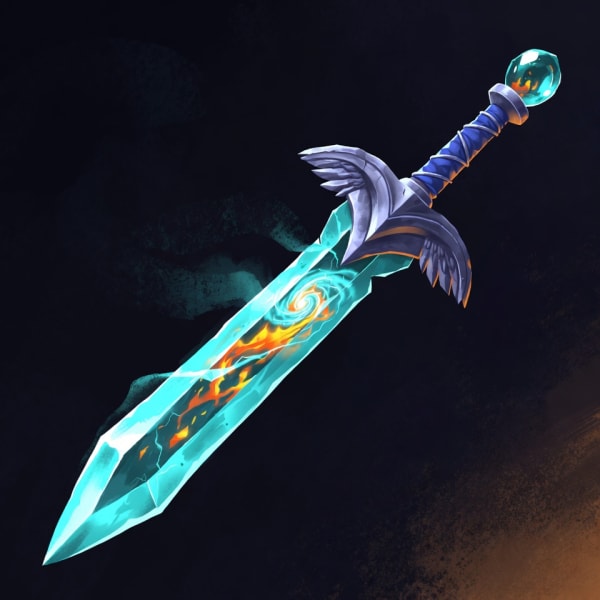
The tabletop version of this is richer than anything a video game can produce, because the reasons people want things are so much more varied and personal than stat optimization. A holy avenger shows up in the dragon’s hoard. The paladin wants it because of course the paladin wants it. It’s practically addressed to her. The fighter wants it because divine politics aside, it’s the best weapon anyone’s seen in twenty sessions, and he’s been swinging the same magic longsword since level five. The warlock wants to sell it to a celestial collector she’s been cultivating as a contact, because the components for her planned ritual cost more gold than the party has ever held at once. Three characters, one item, three completely different economies of desire (martial power, divine identity, long-term scheming) and suddenly the table is having a conversation that touches on everything from party priorities to character values to who’s sacrificed the most lately. That’s not loot distribution; that’s a scene, and it emerged from a single deliberate design choice.
Giving the ranger a great bow when nobody else uses ranged weapons is good, targeted GMing. Every player deserves moments where the loot is clearly theirs. But notice the difference in energy at the table when it happens: the ranger says “I’ll take that,” everyone nods, and you’re back to searching the next room. The item did its mechanical job, but it didn’t create a moment. Contested drops are the layer you build on top of those baseline rewards: the items that turn loot distribution from bookkeeping into a scene.
The design question worth asking every time you place a significant item: which two characters would want this, and why would they want it differently? If only one character has any use for it, you’ve created a foregone conclusion. If everyone wants it equally, you’ve created a bidding war that usually resolves by whoever argues loudest, which isn’t much better unless the table has already agreed on how it splits loot. The sweet spot is two or three characters with asymmetric desire, different reasons rooted in different aspects of who they are and what they’re trying to accomplish. That asymmetry is what turns allocation into narrative.
Practically, this means thinking about your party composition when you design treasure, not just in terms of “the rogue needs a new weapon” but in terms of where characters’ ambitions overlap and compete. Two martial characters in a party mean that every exceptional weapon is a social event waiting to happen; lean into that instead of carefully giving each one their own upgrade path. And when your party is role-diverse (a caster, a healer, a striker, a skill monkey) the items that create the most interesting friction aren’t specialist pieces but things that cross boundaries: a cloak of protection that anyone could use, a sentient weapon with personality requirements that don’t map neatly onto class, an item whose secondary ability matters more than its primary one depending on your build. These force the party to articulate what they value, which is another way of saying they force the characters to reveal themselves to each other.
Watch a gacha pull animation sometime. Really watch it, with the sound on. Before you see the character, before the stars resolve into a name you recognize, the screen tells you what’s coming. The orb shifts color. The crack of light changes from white to gold to prismatic. The music swells or stutters. Every millisecond of that sequence is engineered to stretch the distance between “you got something” and “here’s what it is,” because the designers understand something fundamental: the anticipation is doing more neurological work than the reward. Loot box openings operate on the same principle (the spinning, the slowing, the near-miss where the legendary skin slides just past the cursor before the actual result lands) and none of it is decorative. It is the product.
And yet the default state at most tables is: “You find a Flame Tongue, a Bag of Holding, and 500 gold.” Three seconds, three items, zero emotional architecture. You’ve collapsed the entire distance between mystery and knowledge into a single sentence, and in doing so thrown away the most potent beat available to you: not the item, but the reveal of the item, the moment where possibility is still liquid and hasn’t solidified into stats on a character sheet.
The simplest version of this is sensory, and it costs nothing: describe the weight before the name, the warmth before the properties, the way the blade catches torchlight in colors steel shouldn’t produce. But the real craft lies in stretching that not-knowing across minutes, sessions, even entire arcs, and the techniques for doing so are more varied than most GMs realize.
Your rogue pulls a sword from the dead warlord’s hand. The crossguard is inscribed with a command word in Infernal script that none of the party can read. You’ve just gated the reveal behind party capability rather than a spell slot, which means the road from discovery to understanding becomes its own adventure. They need to find someone who reads Infernal, or they need to risk speaking a word they can’t translate, or the warlock who can read it has to decide whether to share what it says. The item generates play before anyone knows what it does, and the identification isn’t a fifteen-minute ritual; it’s a thread that weaves through the session, building tension every time someone glances at their inventory and sees that unnamed blade sitting there, waiting. Our item identification guide covers the mechanical toolkit for this in detail, but the idea underneath is simple: partial information is more engaging than no information, because it gives players enough to theorize and not enough to be certain.

Then there’s the slow burn, an approach that borrows from bingeable TV rather than slot machines. A staff that feels warm the first time the cleric holds it, that hums faintly during a long rest two sessions later, that flares with light the first time she channels divinity near undead in session six. Each property emerges through use, through bonding, through narrative context that makes the revelation feel earned rather than transactional. This is what happens when you treat an item’s mystery not as a moment but as a campaign structure, compounding investment across weeks of real-world time until the final reveal carries the cumulative weight of every hint that preceded it. Players who’ve spent a month wondering what their weapon does will remember the answer for years, where players who were told on the spot might forget by the next session.
And sometimes (this is the move that takes the most confidence) you never let the mystery resolve at all. The ring that Identify can’t parse, that Detect Magic returns contradictory readings on, that the sage in Waterdeep admits she’s never encountered in four decades of study. The mystery itself becomes the point, and the table fills the silence with speculation that’s more interesting than any stat block you could have written. Is it cursed? Is it sentient? Is it from somewhere that doesn’t follow normal magical laws? Players will argue about whether to wear it, whether to sell it, whether to lock it in a box and drop it in the ocean, and every one of those arguments is play, emergent, character-driven, fueled entirely by the absence of information. Not every unidentified item needs to resolve. Some of the best loot is the loot that stays unknown. And if the moment presents itself down the line for that item to fill a narrative beat that just so happens to be perfect, you’ll look like a genius who foreshadowed the reveal 40 sessions ago.
There’s a subtler mechanism at work here too, one the gacha designers understand intuitively: the near-miss. When a pull animation flashes gold and resolves to a merely-decent four-star, that slight disappointment doesn’t diminish engagement. It amplifies it, because variable reinforcement means the next gold flash might be the real thing. The same principle applies at your table. The dagger wrapped in silk that turns out to be mundane (beautifully crafted, but mundane) isn’t a waste of dramatic buildup. It’s an investment in the next mysterious item, because now your players know that not every enigma resolves into power, which means the stakes of uncertainty are real, which means the next time they find something strange they’ll care even more. The reveal that disappoints sharpens every reveal that follows.
The core idea across all of these approaches is that identification is not a tax on loot. It’s the loot’s emotional delivery mechanism. Flattening it into instant knowledge is like skipping a cutscene that’s better than the gameplay: technically efficient, experientially bankrupt.
Behavioral economists Daniel Kahneman and Amos Tversky built careers around a deceptively simple finding: losing something hurts about twice as much as gaining the equivalent feels good. A twenty-dollar bill found on the sidewalk brightens your afternoon; a twenty-dollar bill lost from your wallet ruins it. The asymmetry is hardwired, and every game designer worth their salt has internalized it, not to punish players, but to make rewards matter by ensuring they come at a cost.
Video games have been exploiting this for decades. Inventory limits in survival horror don’t exist because the developers couldn’t allocate more memory; they exist because choosing between the shotgun and the healing herbs makes both feel precious. The “pick one of three” reward screen in roguelikes works not because the option you choose is so extraordinary, but because the two you abandon sting. Diablo’s inventory tetris, Destiny’s infusion economy, Baldur’s Gate 3’s mutually exclusive quest rewards: all of these are mechanisms for manufacturing the same emotional event: a tradeoff where gaining one thing means visibly, tangibly losing access to another.
The lesson for your table is straightforward in principle and usually botched in practice: loot that forces a choice is more memorable than loot that simply adds to the pile. But here’s the catch: the tradeoff has to be experienced by your players, not merely architected behind the screen. The shop that only appears once creates no tension unless the party knows, in advance, that this is their only chance to buy. The dragon hoard too heavy to carry in a single trip means nothing if you’ve been hand-waving encumbrance for six months. Both sides of the choice need to be visible, real, and felt at the table before the decision point arrives.
What makes this sing at your table (what elevates it beyond anything a video game can touch) is the range of registers you can operate in when constructing a tradeoff. Video games are limited to systems: inventory caps, mutually exclusive skill trees, currency sinks, binary quest flags. You can do all of that, but you can also reach into narrative and character to create dilemmas that no branching dialogue tree could replicate.
At the system level, the tradeoffs look familiar: the hoard contains a Flame Tongue, a chest of gold, and crates of alchemical supplies your wizard has been hunting for three sessions. The mountain pass ahead is bandit country and you can’t carry it all. Somebody has to decide what stays behind, knowing that anything left in a dragon’s lair is going to attract scavengers by morning. Clean, legible, effective: the same pressure a video game applies, just mediated by dice and a character sheet instead of code.
At the narrative level, things get more interesting. A merchant offers 2,000 gold for the strange artifact the party pulled from the ruins, exactly enough to repair their ship before the storm season hits. But the artifact is unidentified, humming with latent magic, and the wizard swears she’s seen the sigil before. Sell the known value and solve an immediate problem, or gamble that the mystery is worth more than safe passage? That’s a tradeoff built on narrative context rather than mechanical constraint, and it only works because the campaign has established that gold has somewhere urgent to go. (If you’re running a game where gold just accumulates with nothing to spend it on, Your Players Have Too Much Gold covers the economy problem in depth.)
But the character level is where you leave video games behind entirely, and this is where the real argument lives. The ancient dragon is dying, pinned under the collapsed ceiling of its own lair, and with its last breath it offers your paladin a choice. Take the hoard (tens of thousands in gold and gems, enough to fund the party’s ambitions for a year) or learn the location of the celestial prison where her mentor has been held for a decade. The party has been broke for three sessions. They need that gold. The fighter is eyeing the pile. The rogue is already calculating shares. But the paladin’s entire backstory, the reason she picked up a sword in the first place, is standing on the other side of that choice. No one at the table is going to forget the silence that follows. No one is going to forget what she decides, or the look on the rogue’s face when she does. That moment, where a character’s personal story collides with the party’s material needs and the tradeoff isn’t between two items but between two kinds of loyalty, is something no procedurally generated loot table, no matter how sophisticated, will ever produce.
And notice what makes all three levels work: the alternative has to be real. The gold only hurts to leave behind if you need it for the ship. The merchant’s offer only creates tension if the gold has a destination: repairs, a bribe, a resurrection. The paladin’s choice only lands if the party actually feels the cost of walking away from the hoard. Gold alongside a magic item only forces a decision if that gold has somewhere to go; if it just piles up in a ledger no one checks, both get pocketed and the moment dies on the table. Smart shop design gives gold a destination, and creating those spending contexts before you drop treasure is half the work of making loot matter.
System: Physical constraints force choices (encumbrance, attunement slots, carrying capacity). You can’t take it all.
Narrative: Story context creates pressure: the gold has a destination, the merchant won’t wait, the ship sails at dawn.
Character: Personal stakes collide with party needs. The paladin’s quest vs. the party’s finances. Only a GM can build these.
The dragon is dead, and the hoard is spread across the lair floor in a glittering mess of coin and steel and things that shimmer wrong in the torchlight.
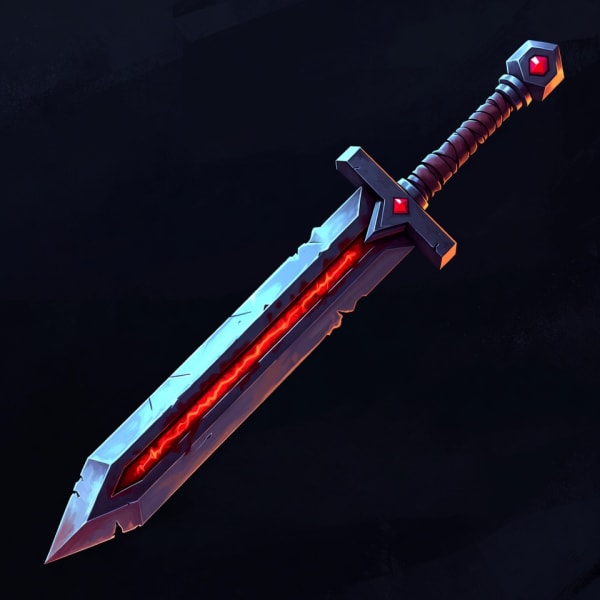
You have a drop table ready (nothing your players know about, just a spread of probabilities you built before the session). You roll in the open, because rolling behind the screen robs the moment of its electricity, and the d100 comes up 07. The table goes quiet. They’ve been playing long enough to know that single digits on a percentile roll mean something, even if they don’t know what your table says. You check the result, keep your face still for exactly one beat too long, and describe what they find half-buried under a cascade of gold: a longsword, but wrong somehow. The blade is dark metal with script running down the fuller in a language none of them recognize, and it hums when the paladin reaches for it. Not vibrates. Hums, like it’s pleased.
The paladin has it in her hands and the fighter hasn’t said anything yet, but she hasn’t looked away from the blade since it came out of the pile. They’ve both been using mundane weapons since level three and this is clearly, obviously, the single best thing that’s come out of any fight in the entire campaign. The paladin found it. The fighter needs it more. Her whole build depends on weapon damage in a way the paladin’s doesn’t, and everyone at the table knows it, and she knows everyone knows it. But the paladin isn’t offering, because it hummed for her, and what does that even mean?
Nobody can answer that question yet. Nobody can read the script. The wizard’s Arcana check reveals that the language is pre-Cataclysm, which means the only people who might translate it are the archivists in Tal Vessen, conveniently and painfully across the sea. The same sea passage the party has been saving for over the last four sessions, scraping together every gold piece from every encounter, turning down purchases they wanted, all to afford the 800-gold fare that gets them to the continent where the main quest continues.
The hoard has roughly 950 gold in it. Enough for passage and a little left over. But the unidentified sword isn’t weightless. It’s a longsword, and on top of the gold, on top of their existing gear, carrying everything means the party is past their encumbrance limit heading into the mountain pass that leads to the port. The pass they know is dangerous, because you told them three sessions ago that bandits own that road and the caravans have stopped running.
And then the table does what tables do when you’ve built a situation with enough competing pressures: it comes alive. The fighter leans forward (not her character, she leans forward) and makes her case, and the paladin’s grip on the sword tightens a little, because the humming means something even if she can’t articulate what. The rogue, who doesn’t care about the sword at all, is doing math on the encumbrance and doesn’t like the numbers. The cleric floats the idea of stashing the gold and coming back for it later, and the whole table groans, because “come back later” in this campaign has meant “never” at least twice before.
Nobody is checking their phone. Nobody is looking at the clock. The fighter and the paladin are negotiating something that isn’t really about the sword. It’s about who this party is and how they treat each other when the stakes are real. The rogue’s encumbrance math has turned into a logistics puzzle that the whole table is solving together, half-serious and half-laughing, suggesting increasingly creative solutions: strap it to the outside of a pack, sell the old gear, send two people light through the pass while the others take the long way with the full hoard. Whatever they decide, they’ll remember it for years. Not because you wrote a dramatic cutscene, but because you built a situation with enough competing pressures that the drama wrote itself.
You don’t need to engineer this for every goblin cave and bandit camp. Most loot should be straightforward: here’s some gold, here’s a potion, keep moving. The game needs a baseline of routine rewards to function, and trying to make every treasure drop into a psychological event would exhaust everyone at the table, you included. But when you want a moment to land (the boss hoard at the end of an arc, the reward for the quest they’ve been chasing for months, the ancient vault that the entire dungeon was built to protect) stack the principles. Roll the drops live so the outcome feels contingent. Include something scarce enough that the party has to negotiate over it. Leave something unidentified so anticipation has room to build. And make the total hoard large enough to matter but heavy enough to cost, so taking everything isn’t the obvious default.
Four levers, pulled together, and the table comes alive in a way that no pre-placed magic item sitting in a read-aloud box ever manages.
Every mechanic we’ve been dissecting (the reinforcement schedules, the social dynamics, the theatrical reveals, the tradeoffs) exists because game designers are trying to simulate, inside a computer, the experience of sitting around a table with people you know and rolling dice for something that matters. The loot box is a prosthetic for the thing you already have.
An algorithm can only vary probability. You as a GM can vary meaning: you can make a roll matter more because the paladin swore an oath three sessions ago that depends on what’s inside this chest, because the rogue has been angling for a blade like this since level one, because the whole party knows that whoever claims this item is choosing a side in a war they’ve been trying to stay neutral in. You can sustain an unboxing across sessions instead of milliseconds, gate a reveal behind an in-world quest instead of a loading screen, and create tradeoffs so entangled with character identity that no player walks away feeling like they just did inventory math. The social dynamics that video games manufacture through class-locked loot tables and DPS meters? You’re working with characters who have histories, grudges, debts, and dreams that no procedural generation system could produce. The contested drop at your table doesn’t create a thirty-second argument in voice chat, it creates a turn in a story arc that will ripple through sessions you haven’t planned yet.
Every one of these systems, in its digital form, is an engineering solution to the absence of a Game Master: someone who can read the room, who knows the characters as people rather than stat blocks, who can adjust on the fly not because an algorithm flagged a retention metric but because they saw a player’s eyes light up.
The entire loot psychology apparatus that drives billions of dollars in game revenue is a machine built to approximate what you do when you’re paying attention at your own table.
The machine has a ceiling. Yours doesn’t.
Now go roll some loot.
The ScryRPG marketplace has community-created loot tables with real drop chances, ready to deploy. Build your own or fork someone else’s, then roll the drops live at the table and let the dice decide.